- Posted
- June 05, 2026
Graphic of the week: Ohio family caregivers face considerable financial challenges
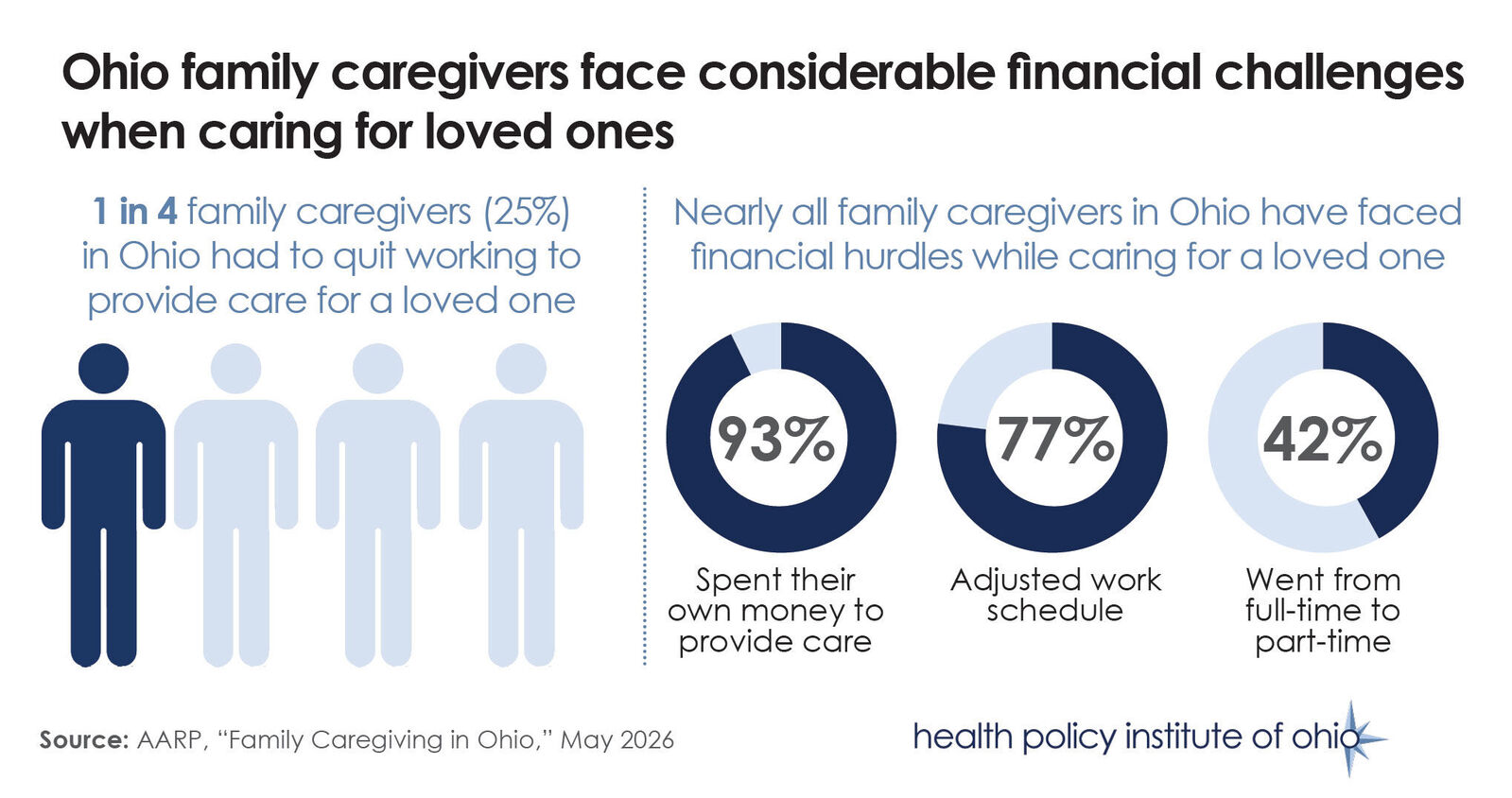
Click to enlarge impage
Graphic of the week
As the Ohio House considers legislation that would make the state the first in the nation to no longer pay family caregivers through Medicaid for providing long-term care services for loved ones, data released last month by AARP shows that many Ohio family caregivers face financial challenges, as illustrated above.
Some types of Ohio Medicaid coverage allow family members, relatives and friends to receive Medicaid payments for providing direct care, such as assistance with eating, bathing and preparing meals. According to analysis from KFF, every state and D.C. allows Medicaid payment to relatives for at least some home care services.
However, a substitute version of House Bill 795 that was introduced yesterday in the Ohio House would ban family members from being paid by Medicaid to offer personal care services to Ohioans with disabilities, among other restrictions to home health services (source: “Disabled Ohioans sound alarm at big, sudden changes to Medicaid home health providers,” Statehouse News Bureau, June 4).
A 2019 study found that people with home care needs who received support from paid family caregivers had lower healthcare use and fewer adverse health events than those without paid family caregivers. Paid family caregivers can also help address major workforce shortages among direct care workers, including personal care aides, who often earn low wages and are unlikely to have benefits. According to HPIO’s 2026 Health Value Dashboard, Ohio ranks 27 compared to all states and D.C. with 8.3 personal care and home health aides per 1,000 population.
The Ohio House Medicaid Committee is expected to hear more testimony on the bill at its next meeting at 2 p.m. on Monday, June 8.