- Posted
- May 22, 2026
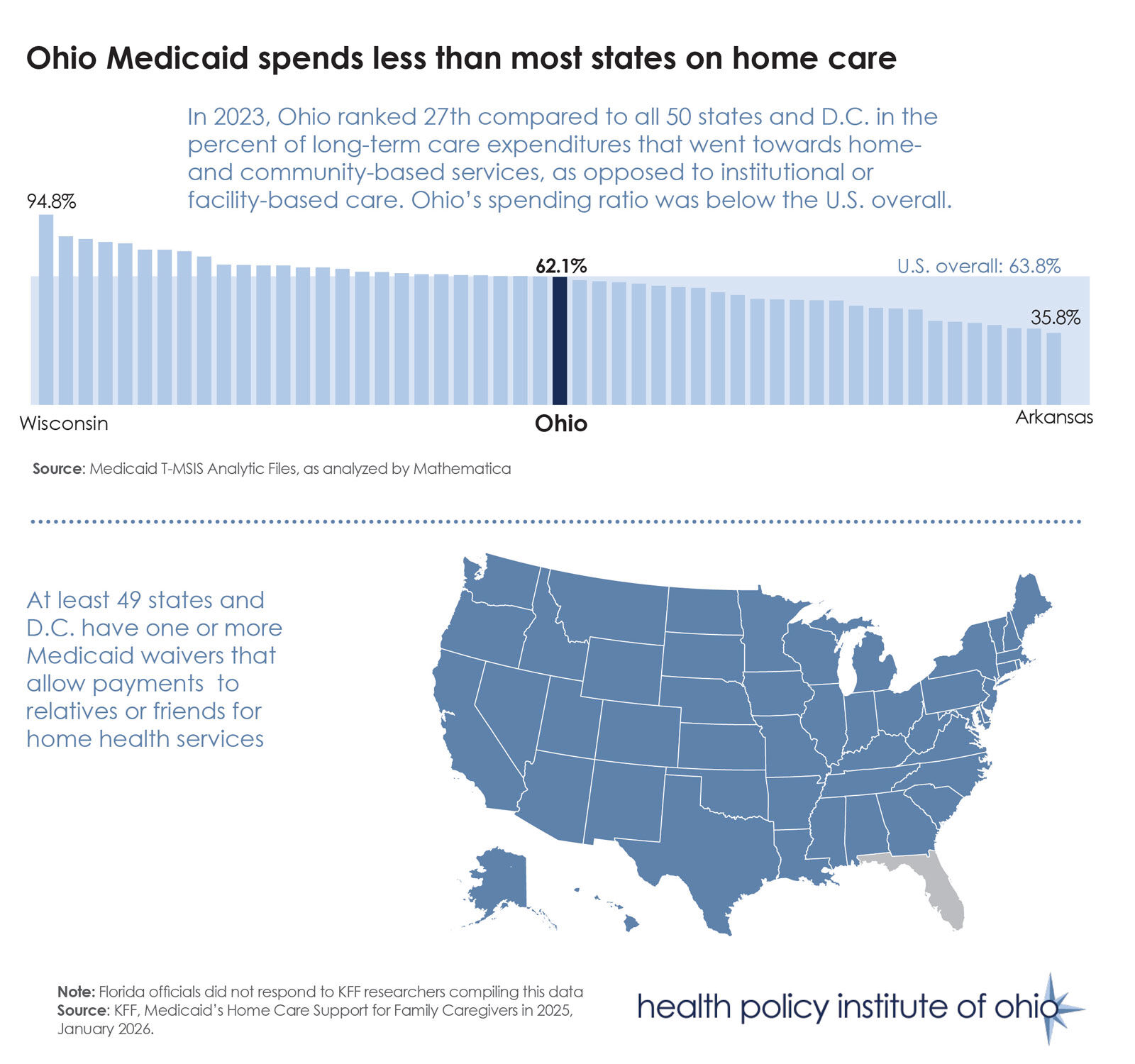
Graphic of the week: Ohio Medicaid spends less than most states on home care
Click to enlarge
Data from the Centers for Medicare and Medicaid Services shows that Ohio ranks 27th amongst all states and D.C. in the percentage of Medicaid long-term care spending that goes towards home- and community-based services (HCBS) compared to facility-based care, as illustrated above. All states cover HCBS through waivers granted by the federal government.
Medicaid pays for critical supports for older adults and people with disabilities who require medical treatment and assistance with daily activities. HCBS enable people to live at home, rather than moving into institutions like nursing facilities.
Accessing services and supports at home is associated with positive outcomes like cost savings and improved life satisfaction. Enrollees in Ohio must meet strict eligibility criteria to receive HCBS through the state’s waiver programs, including financial requirements and meeting a specific level of care.
Some Ohio programs that support home care allow family members, relatives and friends to receive Medicaid payments to provide direct supports, such as assistance with eating, bathing and preparing meals.
A 2019 study found that people with home care needs who received support from paid family caregivers had lower healthcare use and fewer adverse health events than those without paid family caregivers. Paid family caregivers can also help address major workforce shortages among direct care workers, including personal care aides.