- Posted
- January 16, 2026
HPIO releases brief on connections between youth mental health, juvenile justice system
Click to enlarge
The Health Policy Institute of Ohio has released a new policy brief on the connections between youth mental health and the juvenile justice system.
The brief outlines the root causes of mental health challenges for youth at risk for justice involvement and gives an overview of the juvenile justice system, including at what points in the process youth mental health can be supported.
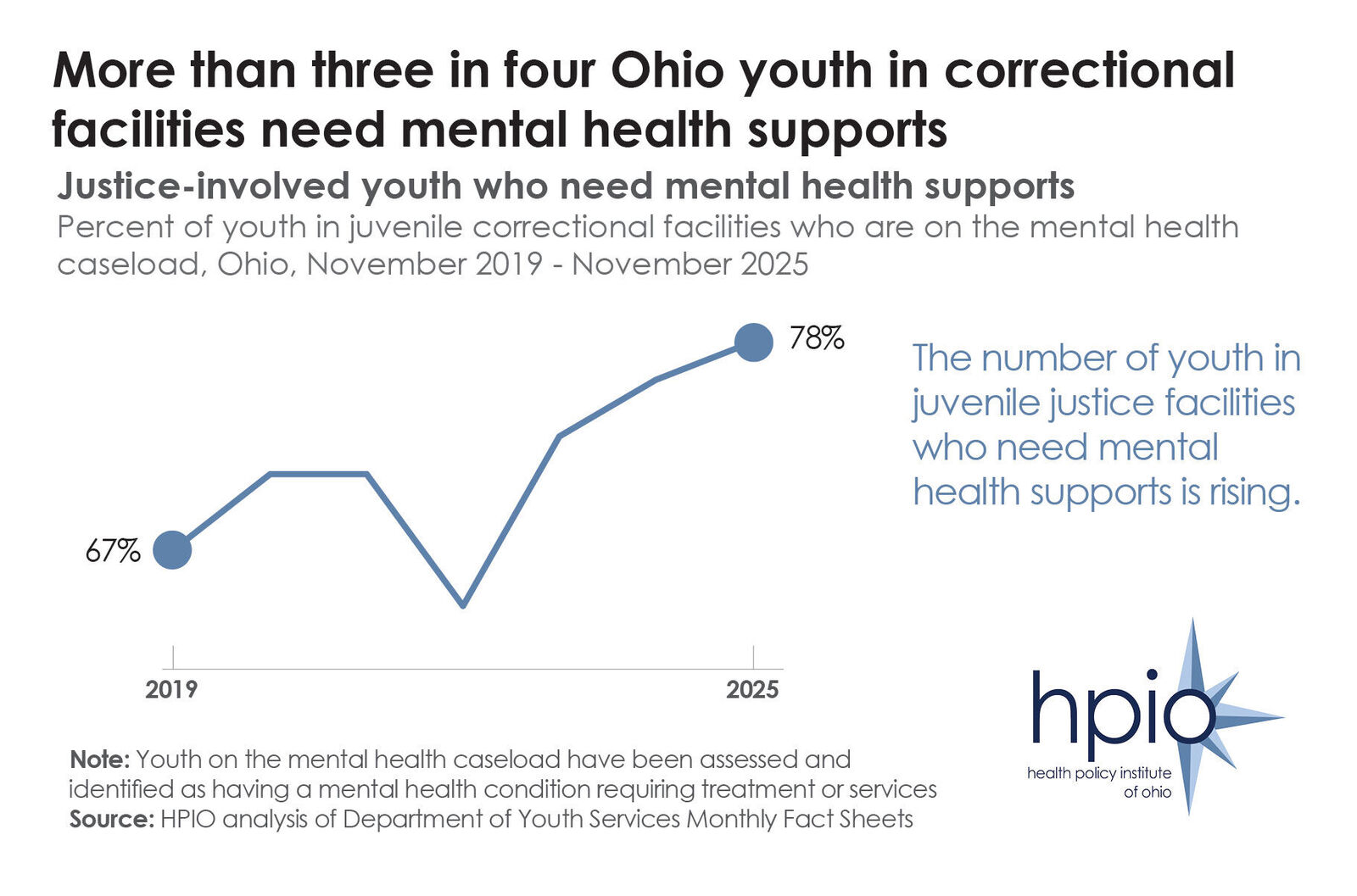
Data included in the brief shows that youth in juvenile justice facilities have higher rates of mental health disorders, including depression, obsessive-compulsive disorder, suicidal ideation and suicidal behavior. And the percent of Ohio youth in juvenile correctional facilities who need mental health supports has increased in recent years, as illustrated above.
The brief also includes nine policy options that state policymakers can implement, and for which juvenile justice and child mental health partners can advocate, to improve mental health outcomes for at-risk youth and prevent justice involvement. The policy options, which were identified through a review of the U.S. Department of Justice Crime Solutions inventory, and through the expertise of the HPIO Child Mental Health advisory group, aim to prevent delinquent behavior, promote accountability, cultivate community safety and support the mental health of youth in detention or commitment.
“Many experiences shape the mental health of children and youth, including relationships with family and peers, traumatic events and interactions with the juvenile justice system,” the brief states. “By ensuring the health and well-being of children, juvenile justice policies can prevent delinquent behavior and improve community safety.”